Car Insurance Fronting: The 'Innocent' Mistake That Voids Cover (UK Parents' Guide)
Fronting means naming yourself as the main driver when your child actually is. It feels harmless, but it's insurance fraud that voids the policy. Here's why families do it, what it really costs, and the legal alternatives — with sources.
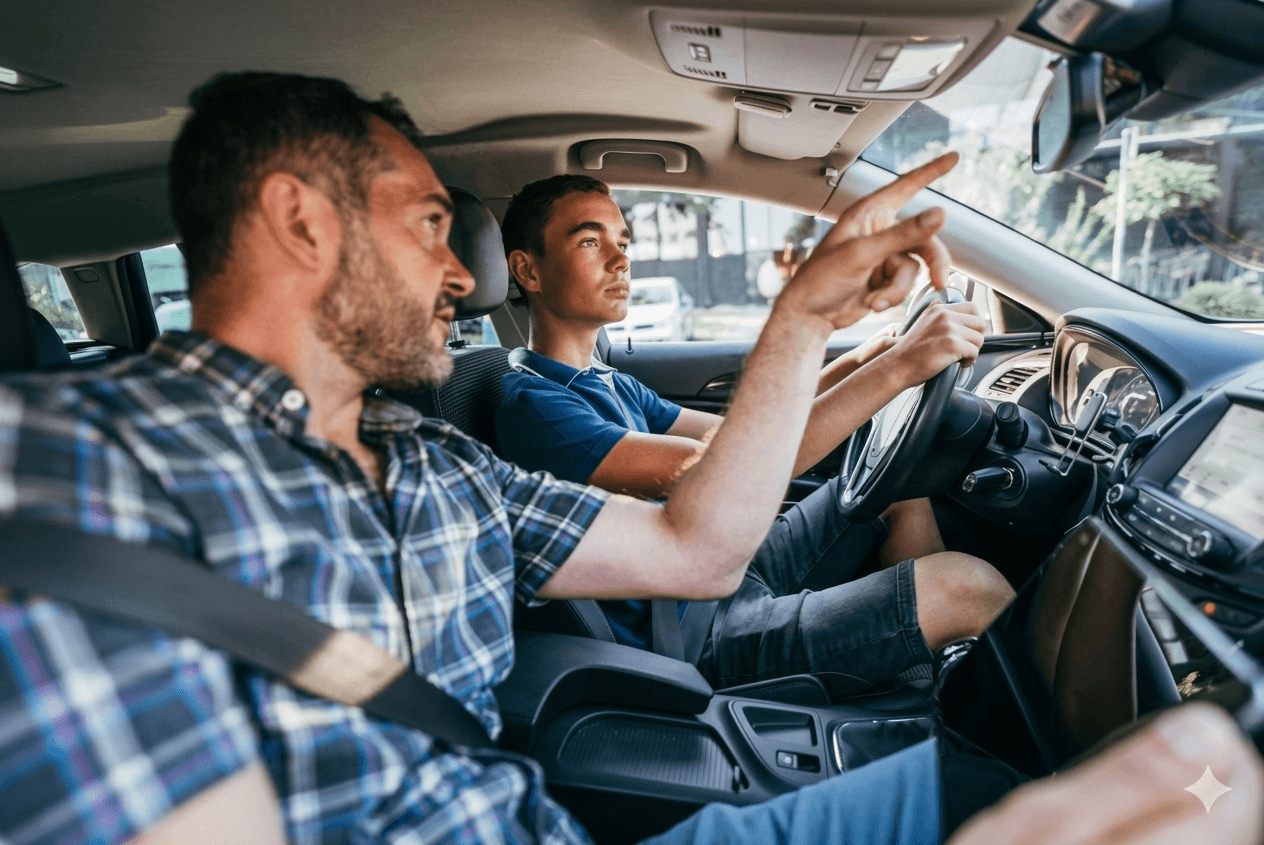
The short answer: Fronting is when you declare an experienced, lower-risk person — usually a parent — as the main driver of a car that a young driver actually drives most. It's tempting because it can knock hundreds of pounds off the premium, but it is insurance fraud. If it's discovered, the insurer can cancel or void the policy, refuse a claim, leave the young driver effectively uninsured, and — in serious cases — the people involved can face prosecution and a criminal record. There are legitimate ways to cut a young driver's premium; fronting isn't one of them.
Most parents who front don't think of themselves as committing fraud. They think of themselves as helping their child afford to drive. That's exactly why this guide exists — not to lecture, but to lay out plainly what fronting is, why the line is so easy to cross by accident, and what you can do instead that's both cheaper in the long run and completely above board.
What is fronting, exactly?
Fronting is a specific misrepresentation on a car insurance policy. In the words of the RAC, "Fronting is when a driver declares to a car insurance company that he or she is the main driver of a vehicle when the main user is actually someone else" (RAC, accessed July 2026).
The classic version looks like this: a car is bought for a 17- or 18-year-old who has just passed their test. The parent puts the policy in their own name, lists themselves as the main driver, and adds the young driver as a named driver. On paper, an experienced 50-year-old with a clean licence is the main user. In reality, the car sits on the young driver's road, does the young driver's mileage, and the parent barely touches it.
That gap between what's declared and what's true is fronting. It isn't the same as simply adding your child to your policy, or being a genuine named driver on a car you occasionally borrow. The problem is specifically declaring the wrong person as the main driver to get a cheaper price.
Named driver vs main driver vs fronting
The confusion is understandable, because two of these three things are completely legitimate. The table below shows where the line falls.
| Term | What it means | When it's used | Legitimate? |
|---|---|---|---|
| Main driver (policyholder) | The person who drives the car the most | Declared as the primary/main user of the vehicle | Yes — provided it's accurate |
| Named driver | An additional person insured to drive the car occasionally | Added alongside the main driver | Yes — when they genuinely drive it less than the main driver |
| Fronting | Declaring a lower-risk person (often a parent) as main driver when a higher-risk driver (often the young driver) actually is | Used to cut the premium | No — it's insurance fraud |
As 1st Central puts it, the main driver is simply "the person who drives the car most often" and "must be declared honestly when taking out a policy." A named driver is "someone else who's added to the policy and allowed to drive the car, but doesn't use it the majority of the time." The trouble starts, they note, when "the named driver is actually the person who drives most of the time — that's fronting, and it's not allowed" (1st Central, accessed July 2026).
So a parent can absolutely be a named driver on a young driver's car — if the young driver is honestly the main driver. And a young driver can absolutely be a named driver on the family car they occasionally borrow. It's the swap — putting the low-risk name in the main-driver slot to lower the price — that crosses into fraud.
Why do so many families do it "innocently"?
Because the numbers are genuinely brutal, and the fix looks harmless.
Young drivers pay far more than anyone else on the road. According to Quotezone's analysis of a random sample of over 100,000 UK car insurance policies from October to December 2025, the average premium for drivers aged 17–24 was £1,098.23, against a whole-UK average of £591.57 — meaning young drivers paid an average of £506.66 more a year than the typical motorist (Quotezone, Q4 2025 data, accessed July 2026). And that's after a fall from a high of £3,056 in February 2024, so many families remember quotes far steeper than today's average.
Set against that, listing an experienced parent as the main driver can look like a small, sensible economy. Nobody sits down intending to commit fraud. The reasoning tends to run: it's my car on paper, I'll drive it sometimes, I'm just trying to help them get started. The intent is protective. That's what makes fronting so common and so easy to slide into — the motive feels like the opposite of dishonesty.
But insurance pricing isn't arbitrary. A young driver's premium is high because, statistically, newly qualified drivers are more likely to make a claim in their first years on the road. When you declare the parent as main driver, you're asking the insurer to price the car as if that risk doesn't exist. The premium is lower because the insurer has been given the wrong picture of who's actually behind the wheel.
Why is fronting illegal — and what are the consequences?
Fronting is not a grey area or a loophole. The RAC states plainly that it is "a crime and punishable as such." Here's what can actually happen if it's discovered — typically when a claim is made and the insurer investigates who was really driving.
Your claim can be refused. The insurer "could refuse to pay for any damage to a car if the main driver isn't correctly stated" (RAC). That means an accident could leave you paying for repairs — to your own car and potentially others' — entirely out of pocket.
The insurer can pursue you for third-party costs. Even where the insurer pays an innocent third party's claim (because it's legally required to), it "could then pursue the policyholder to recover the uninsured costs" (RAC). Those costs, in a serious injury claim, can be very large.
The policy can be cancelled or voided. The insurer "could cancel or void the policy, leaving both the young driver and potentially the parent without insurance" (RAC). A voided policy is treated as if it never existed.
The young driver can be treated as uninsured. This is the consequence that catches people out. If the policy is void, the person driving was effectively uninsured. As 1st Central notes, fronting "can invalidate the policy, leaving the driver uninsured, and may also lead to fines, penalty points or even prosecution" (1st Central). Driving without valid insurance is itself an offence.
Future cover gets more expensive — for years. Having a policy cancelled or voided, or a claim refused, is something you must declare on every future application. The RAC notes "the culprits could have to pay more for insurance in the future as having cover refused or cancelled … often leads to higher premiums." A cancellation follows a driver around; some insurers won't quote at all.
In serious cases, prosecution and a criminal record. If the people involved "are prosecuted for fraud, they could end up with a criminal record" (RAC). A fraud conviction reaches well beyond motoring — it can affect employment and other financial products for years.
Put together, the "saving" from fronting is borrowed against a much larger potential loss. The premium gap is measured in hundreds of pounds; the downside is measured in an uninsured accident, a voided policy, and a lasting mark on both people's records.
How do insurers actually detect fronting?
Insurers rarely challenge the main-driver declaration when you buy the policy — the scrutiny comes later, usually at claim time. When a young named driver is involved in an accident, or a claim looks inconsistent with the declared usage, investigators look at the practical reality: where the car is kept overnight, who was driving when incidents happened, the mileage pattern, and whether the "main driver's" own car and commute make sense alongside a second vehicle they supposedly drive most.
None of this requires a confession. If the declared story — experienced parent as main user — doesn't match a car that lives at a student flat and does a young person's mileage, that mismatch is the evidence. This is why fronting so often unravels at exactly the worst moment: right after a claim, when the family most needs the cover to work.
What are the legitimate alternatives?
The good news is that almost everything families want from fronting — a lower premium for a young driver — can be pursued honestly. None of these are guarantees, and prices depend on the car, the driver and the market, but each is legitimate:
- Declare the young driver as the main driver — and add the parent as a named driver. Counter-intuitively, honestly adding a more experienced named driver to the young driver's own policy can sometimes reduce the price, because the insurer sees an additional lower-risk person with access to the car. The key difference from fronting is that the young driver stays in the main-driver slot because that's the truth.
- Choose a smaller, lower-insurance-group car. Insurance group is one of the biggest levers on a young driver's premium. A modest, low-powered first car is priced very differently from something quick.
- Consider a telematics or "black box" policy. These base part of the price on how the car is actually driven. They're not for everyone, and they come with their own trade-offs — we cover them in our guide to telematics insurance for young drivers — but they're a legitimate route to a lower price for a careful driver.
- Build the young driver's own No Claims Discount. Every claim-free year the young driver accrues in their own name is worth real money later. Fronting robs them of exactly this — the years of clean record that would otherwise be lowering their premium by their early twenties.
- Look at the full toolkit. We've pulled together the legitimate levers in how to reduce young driver insurance costs, from voluntary excess to mileage limits and named-driver structures done properly.
The through-line is honesty about who drives the car. Get that right and every other saving is fair game.
Where does telematics and family monitoring fit in?
Worth being clear, because it's a common source of confusion: a family GPS or driving tracker is not insurance, doesn't set your premium, and can't prove anything to an insurer on your behalf. Oculamor has no insurance status and no relationship with your insurer.
What honest usage clarity does help with is a much simpler, private question: who actually drives this car most? For a lot of families, the answer feels obvious until they look — and getting it right in your own mind is the first step to declaring the main driver accurately rather than optimistically. If you genuinely share a car between two young people, that question gets harder still, which is exactly the territory we cover in two siblings, one car: main-driver rules and accidental fronting. And if you want to understand what a family tracker actually shows — and what it deliberately doesn't — see what a family tracker shows.
Just as important is the parallel question for modified cars, where undeclared changes can void cover in much the same way an undeclared main driver can — see do car mods void insurance?.
Frequently asked questions
Is it fronting if my child is a named driver on my car?
Not necessarily. It's only fronting if your child is actually the main driver of that car but is listed as a named driver to keep the price down. If you genuinely drive the car most and your child borrows it occasionally, adding them as a named driver is perfectly legitimate. The test is who really uses the car the majority of the time.
Can a parent ever be a named driver on a young driver's car?
Yes — and this is one of the legitimate alternatives. If the young driver honestly is the main driver, adding an experienced parent as a named driver can sometimes lower the premium. The crucial difference from fronting is that the young driver stays declared as the main driver, because that's the truth.
What happens if I've already set up a policy this way?
Speak to your insurer and correct the main-driver declaration. It's far better to fix an inaccurate policy before any claim than to have it unravel during one. Correcting it may change the premium, but it removes the risk of a refused claim, a voided policy and everything that follows.
Does fronting actually save money?
In the short term, it can lower the premium — that's why it happens. But it costs the young driver years of No Claims Discount in their own name, and if it's ever discovered it can turn a few hundred pounds of "saving" into a refused claim, a cancelled policy that must be declared for years, and potentially prosecution. Over a young driver's first several years on the road, doing it honestly is usually cheaper.
Is fronting a criminal offence?
It can be. The RAC describes fronting as "a crime and punishable as such," and where it's prosecuted as fraud it can lead to a criminal record. At minimum, a discovered case typically means a voided policy and refused claim; at worst, it means prosecution.
The bottom line
Fronting is the rare insurance mistake that's usually made out of love, not dishonesty — a parent trying to get their child on the road affordably. But the insurer isn't pricing your intentions; it's pricing who actually drives the car. Declare that honestly and you keep your cover valid, protect your child from being treated as uninsured, and let them build the clean record that will bring their premiums down on its own.
If the real problem is cost, tackle the cost honestly: the right car, the right policy structure, and the legitimate savings in how to reduce young driver insurance costs. And if you're weighing up how much visibility a family wants over a new driver's journeys — separate from insurance entirely — see how transparent family monitoring works for young drivers.
Sources accessed July 2026: RAC, 1st Central, Quotezone (Q4 2025 sample of 100,000+ UK policies). Insurance rules and prices change — check current sources and your own policy wording before acting. This article is general information, not insurance or legal advice.
Keep an eye on a new driver — the calm way
Live location, recorded speed with mapped speed-limit context, and honest driving insight you can talk through together. From £7.99/month per vehicle plus a one-time £30 device. Cancel anytime.
You might also like
More articlesTelematics Insurance for Young Drivers: A Comprehensive Guide
Discover the pros and cons of telematics insurance for young drivers in the UK, including discounts and expert advice on building trust with teen drivers
The black-box quote is cheaper. What could cancellation cost?
Black-box insurance can be cheaper, but conditions matter. Learn the documented cancellation costs, replacement cover, refunds and evidence to keep.
Planning your child’s first long drive to university
Help a newly qualified driver plan their first long trip to university: route, rest stops, motorway practice, arrival and what to do when plans change.